
If you are starting a new job as a barista, there are five key drinks you need to know how to make: espresso, flat white, latte, cappuccino, and long black. These drinks appear on every menu and make up the majority of what customers order, so getting them right is essential.
This guide follows one workflow for preparing those five drinks, including cup sizes, shot splitting, milk texture, and pouring approach. The exact coffee recipe should always be checked with your roaster and on the coffee bag.
Start With the Coffee Recipe

The first step is to talk to your roaster and check the bag to find out the recipe for the coffee you are using. In this example, the recipe is a normale split.
There are 22.5 grams of coffee in the basket. For the latte and cappuccino example, the total yield is 45 grams out, described as two 22.5 gram shots. The guide also notes that you should follow your own recipe.
Espresso and Flat White
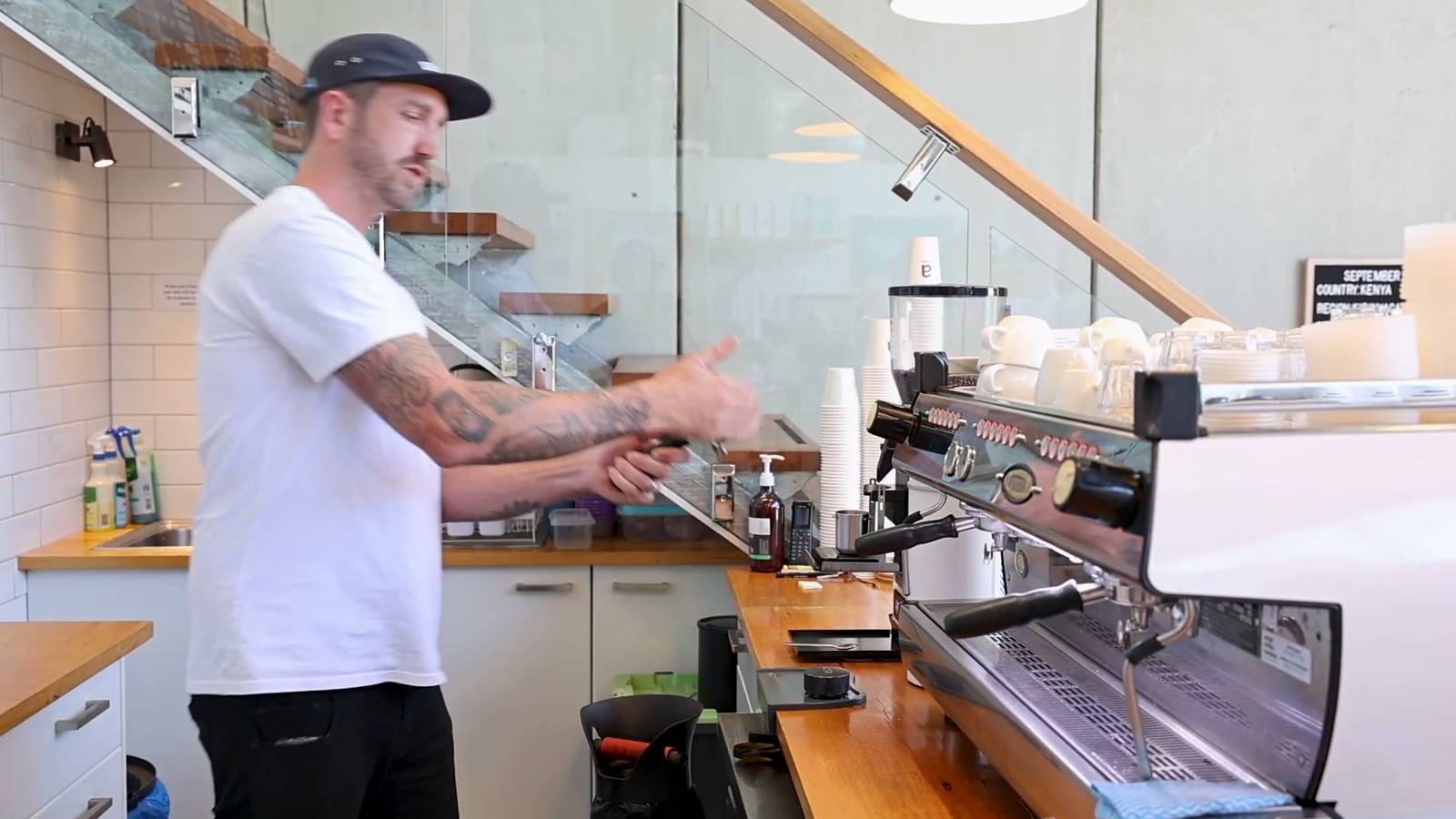
The process begins by making an espresso and a flat white together by splitting the shot and pulling two single shots from a normale extraction.
Espresso
One side of the shot goes into a 90 ml cup for the short black or espresso. This creates the espresso drink.
Flat White
The other side of the shot goes into a 190 ml ceramic cup for the flat white.
For the milk, only a small amount of air is added. Then the tip is buried so too much air is not added. This creates a thin milk texture. The result is a nice, light milk texture for the flat white.
Latte and Cappuccino
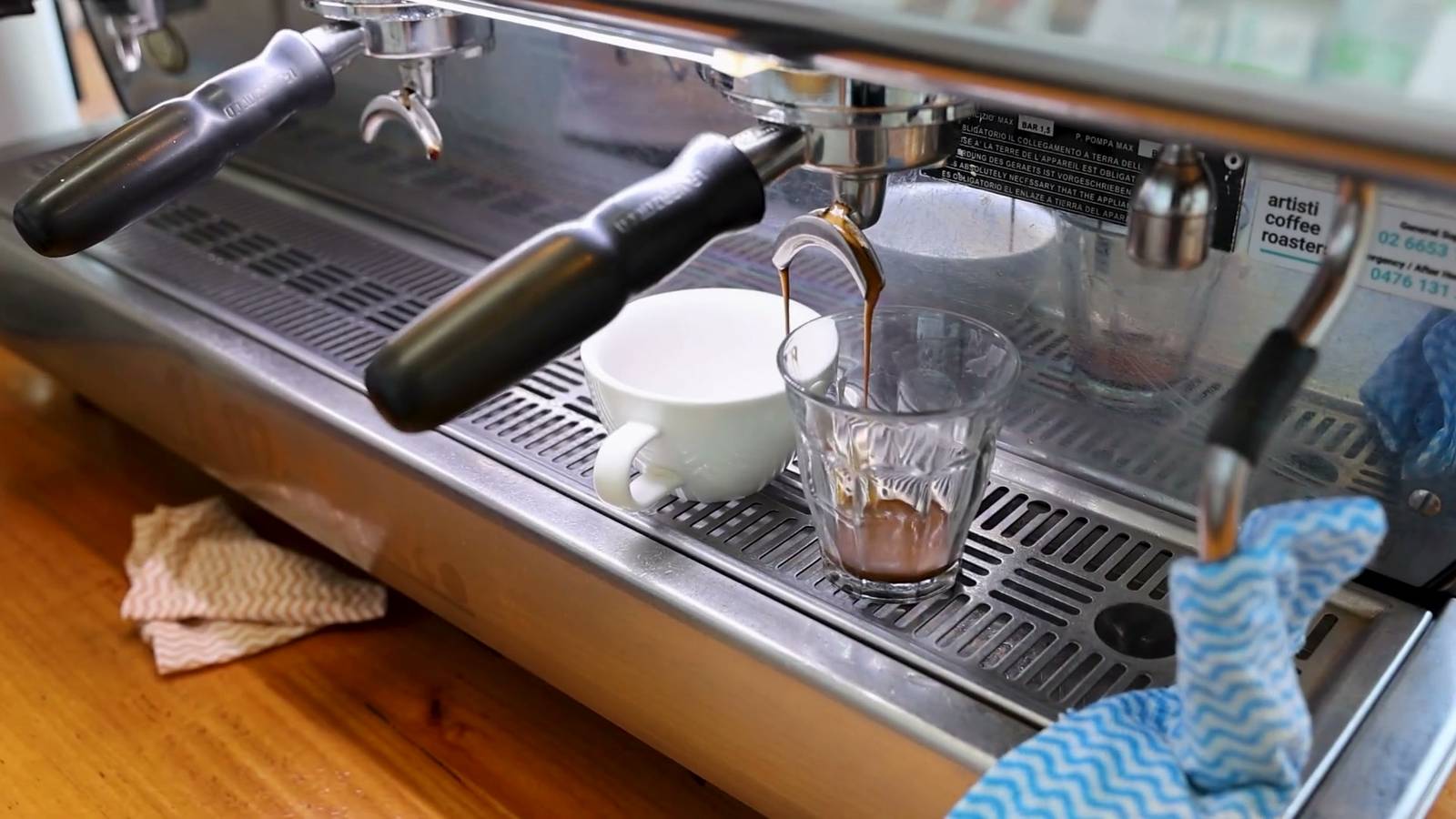
The latte and cappuccino are also prepared by splitting the coffee.
- Latte: 220 ml glass
- Cappuccino: 190 ml cup
The latte has a little more milk, which means the ratio of coffee to milk is lighter and therefore a little weaker than the cappuccino.
Latte
For latte milk, the same general steaming process is used, but air is added for a little bit longer than for the flat white. On the commercial machine shown, roughly 4 seconds of air is added.
The single shot is combined with the latte milk, and the drink is poured into the 220 ml glass.
Cappuccino
For cappuccino milk, the air is kept going a little bit longer still, while keeping small microfoam bubbles the whole time. On the machine shown, this is about 6 seconds of air. It is also noted that you need to adapt the air on your machine to suit your steam wand.
In Australia, the cappuccino is poured straight on top. It can sit flat and does not need to bulge over the top. To make it a cappuccino in Australia, a nice little amount of chocolate is added on top.
Long Black
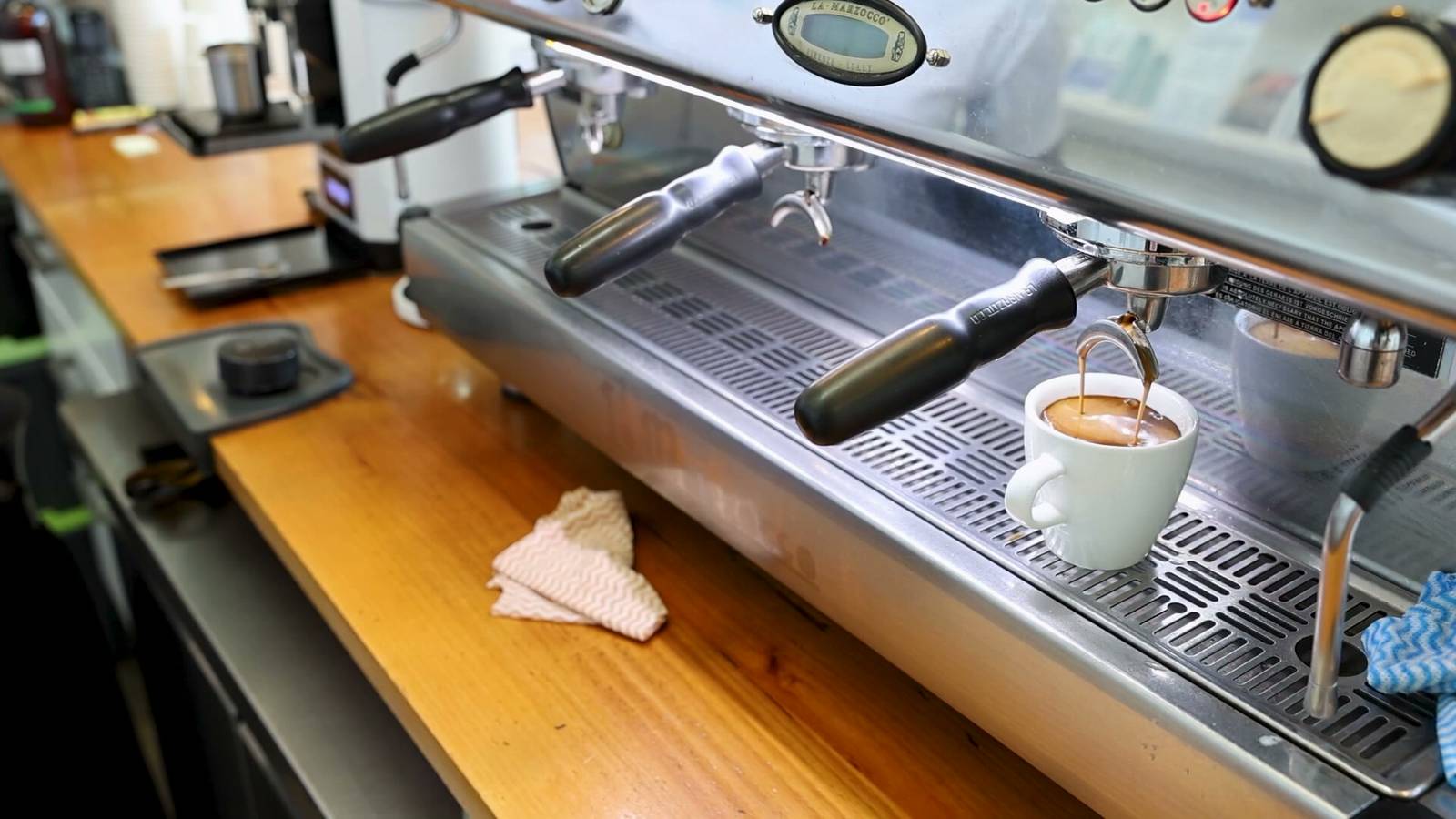
The final drink is the long black. Boiling water is added to a 170 ml cup first.
If desired, a temperature control kettle at 75° to 85° can be used to make it a much more specialty experience. Traditionally, however, the water comes straight from the coffee machine, and it is noted that this water is quite warm, quite hot, so care is needed.
A double shot is then dropped straight on top of the water. To help the crema float, the cup is lifted as close to the water as possible without dunking the spouts in. The drink uses the full double shot, described as the full one-to-two ratio of coffee sitting on top.
Why These Five Drinks Matter
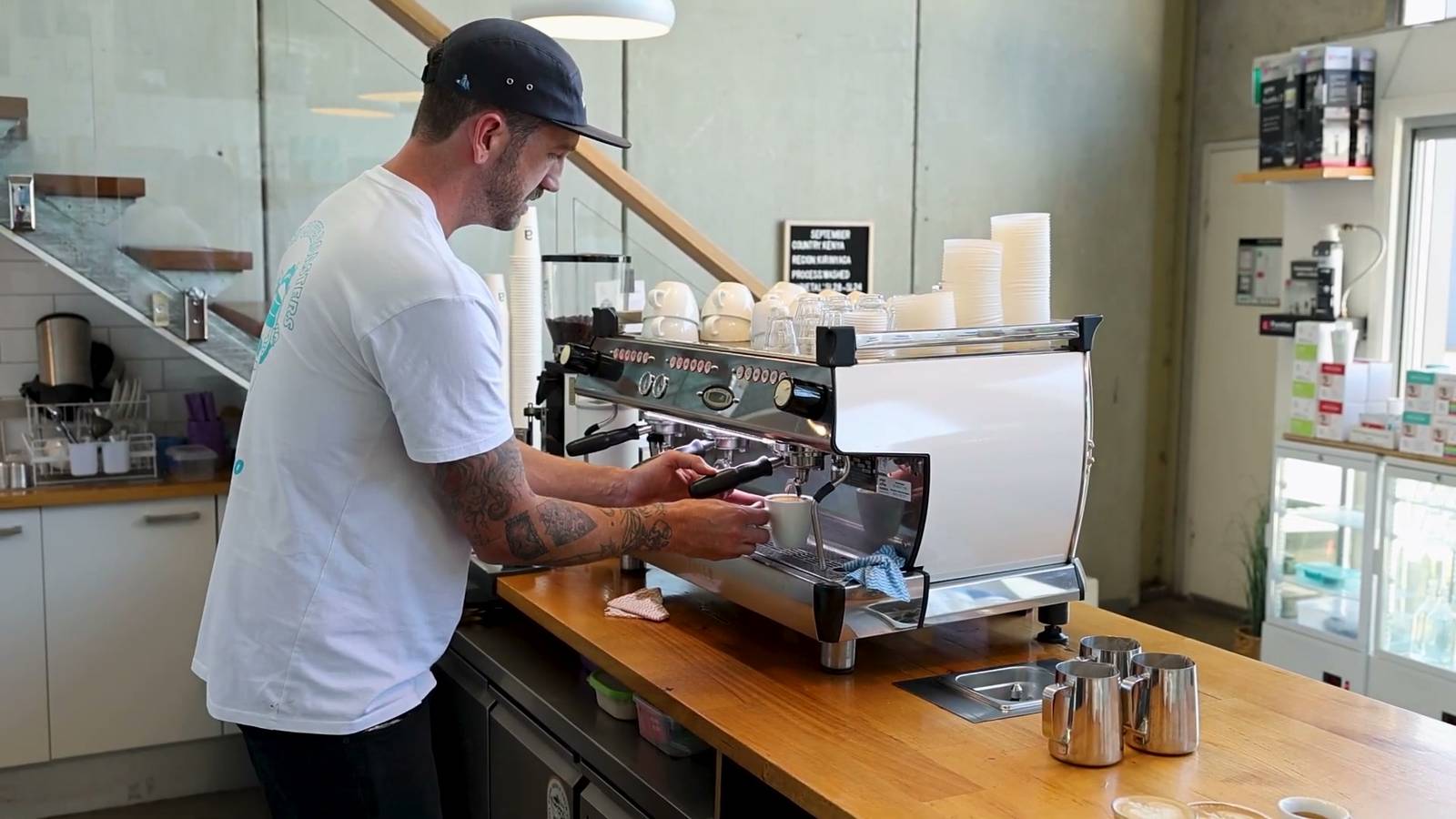
These are the five key drinks found on every menu. They make up the majority of the drinks customers order, so a new barista needs to nail them and get them right.
There are also other drinks on a full coffee menu, such as chai, piccolo, and macchiato, but the five drinks covered here are the core drinks to focus on first.
FAQ
What are the five key drinks a new barista should know?
The five key drinks are espresso, flat white, latte, cappuccino, and long black.
How much coffee is used in this example?
This example uses 22.5 grams of coffee. The guide says you should check your own coffee recipe with your roaster and the bag.
What cup sizes are used?
- Espresso: 90 ml cup
- Flat white: 190 ml ceramic cup
- Latte: 220 ml glass
- Cappuccino: 190 ml cup
- Long black: 170 ml cup
What is the milk texture for a flat white?
The flat white uses thin milk texture, created by adding only a small amount of air and then burying the tip so too much air is not added.
How is latte milk different from cappuccino milk?
Latte milk has air added for a little bit longer than flat white milk, while cappuccino milk has air added for a little bit longer still. In the example, the latte gets roughly 4 seconds of air and the cappuccino roughly 6 seconds, depending on the machine and steam wand.
How is a cappuccino finished in Australia?
In Australia, the cappuccino is poured straight on top and finished with a nice little amount of chocolate.
How is a long black made?
A long black is made by adding water to a 170 ml cup first, then dropping a double shot straight on top. The cup is lifted close to the spouts to help the crema float.
Source:

Hockey fan, nature enthusiast, hiphop head, Eames fan and HTML5 Guru. Doing at the junction of aesthetics and programing to create great work for living breathing human beings. I work with Fortune 500 companies and startups.